I Keep Hearing About Yoga Nidra… What Is It?
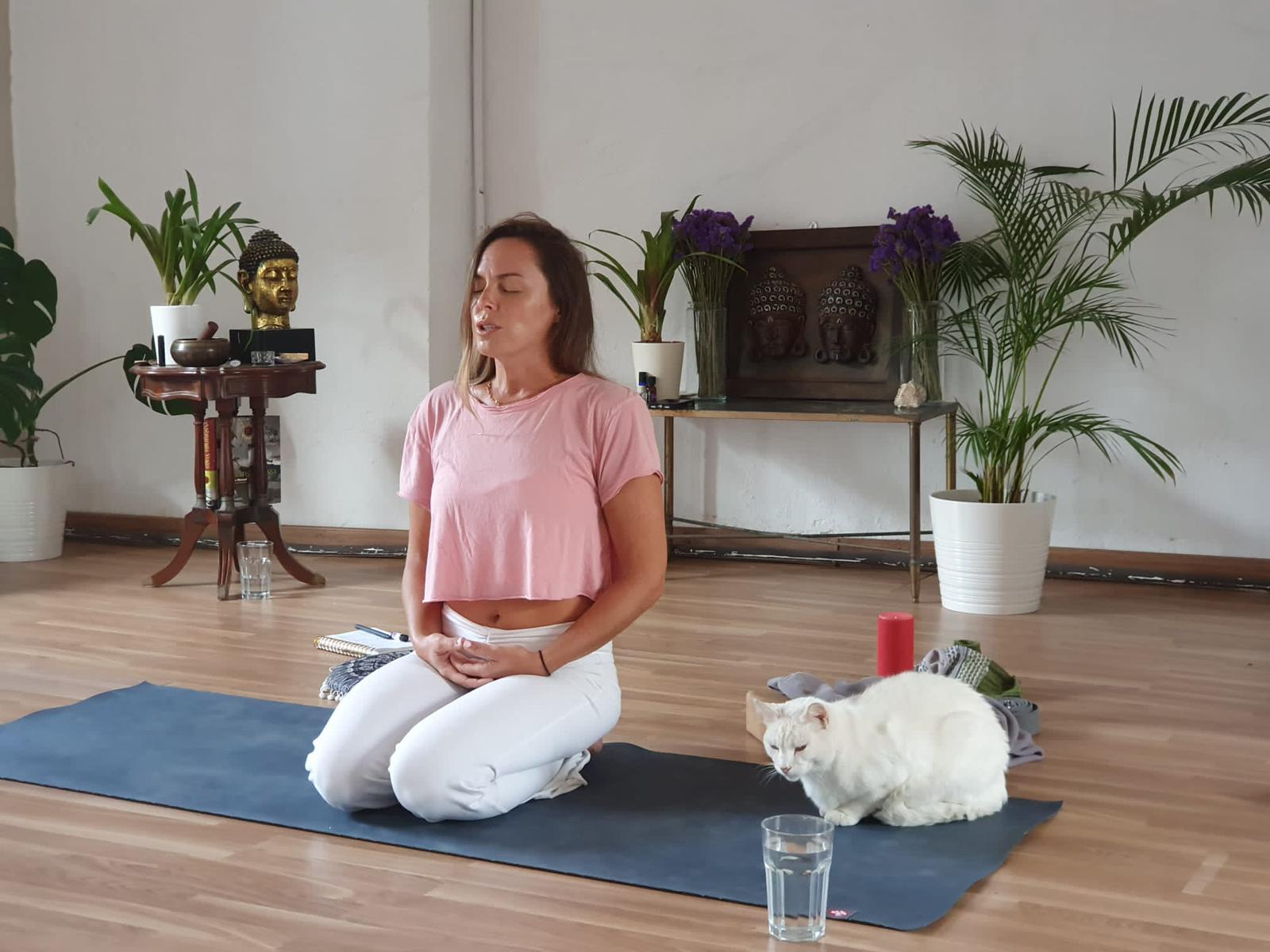
What Is Yoga Nidra? Understanding the Practice of Conscious Sleep
Over the past few years, the phrase Yoga Nidra has been appearing everywhere — in yoga studios, wellness podcasts, sleep apps, and meditation spaces.
But what exactly is it?
Many people assume Yoga Nidra is simply a guided relaxation or a type of meditation practiced while lying down. While those descriptions capture part of the experience, they don’t fully express what the practice actually is.
In the yogic tradition, Yoga Nidra refers to a state of conscious sleep — a condition where the body rests deeply, the mind settles, and awareness remains present.

The word itself reflects this idea.Yoga means union, and nidra means sleep. Together they point to a unique state of awareness that exists between waking and sleeping.
In this state, the body can enter profound relaxation while the practitioner maintains a thread of witnessing awareness. Rather than drifting into ordinary sleep, the mind remains quietly attentive.
The State Between Waking and Sleeping
Yoga Nidra guides the practitioner into a subtle space that exists between full wakefulness and sleep.
From the outside, someone practicing Yoga Nidra may appear completely asleep. The body is still, the breath is slow, and the nervous system is deeply relaxed.
Internally, however, awareness remains present.
This is why the practice is sometimes described as “awakening within rest.” The body sleeps, but consciousness stays gently aware.
Traditionally, this state is associated with a level of awareness beyond ordinary waking consciousness — a quiet witnessing presence that observes sensations, thoughts, and imagery without becoming entangled in them.
A Practice That Moves Through Layers of Awareness
Although Yoga Nidra often feels effortless to the practitioner, it follows a very intentional structure.
A typical session moves through several stages designed to gradually relax the body and focus the mind:
• settling the body into stillness• setting a sankalpa (a heartfelt intention)• rotating awareness through different parts of the body• observing the breath• turning the senses inward• visualization and symbolic imagery• resting in quiet awareness before returning to waking consciousness
Each stage gently guides attention deeper inward, allowing the nervous system to release tension while awareness remains present.
Over time, practitioners often report feeling not only physically rested, but also mentally clear and emotionally balanced.
More Than Relaxation
Because the body enters such deep rest, many people initially approach Yoga Nidra as a relaxation practice — and it certainly can provide that.
But in traditional yoga teachings, its purpose reaches further.
Yoga Nidra can help reveal patterns in the subconscious mind, support emotional integration, and cultivate a deeper connection to the witnessing self — the aspect of awareness that remains constant even as thoughts and experiences change.
In this way, the practice reflects one of the central aims of yoga itself: quieting the fluctuations of the mind so that awareness can rest in its natural state.
Why So Many People Are Discovering Yoga Nidra

In a world where many people live with constant stimulation, stress, and sleep disruption, practices that allow the nervous system to fully rest are becoming increasingly valuable.
Yoga Nidra offers something unique:deep restoration combined with inner awareness.
For some people, it becomes a powerful tool for relaxation. For others, it opens the door to deeper meditation and self-inquiry.
Either way, the practice invites us to experience something we rarely allow ourselves in modern life: the intelligence of true rest. As interest in Yoga Nidra continues to grow, more teachers and practitioners are beginning to study the practice more deeply in order to understand how this state of conscious rest can be shared with others.
At Sukha Yoga School, Yoga Nidra is taught within the broader framework of traditional yoga philosophy, where the practice is understood as both a method and a state of awareness.
test
test
test
lets goo
test